A yoga prop is a piece of equipment used as part of a practice. Mats, blocks, straps and blankets have different jobs; they are not badges that separate beginners from experienced students. If you are exploring Slow Flow Yoga in Gingins, near Nyon, knowing the names can make class information easier to understand. The first step is to find out what your chosen class uses, rather than buying a bag of equipment in advance.
A mat and a prop collection are different things
A mat gives you a defined surface for practice. Other equipment may be introduced for a particular position or part of a class. Seeing several objects beside someone’s mat does not mean you need to bring the same collection to every session.
In its introduction to starting Iyengar yoga, Iyengar Yoga UK lists familiar equipment such as mats, blocks, blankets, belts and bricks. That is useful background on the vocabulary, not an equipment list for my Slow Flow classes.
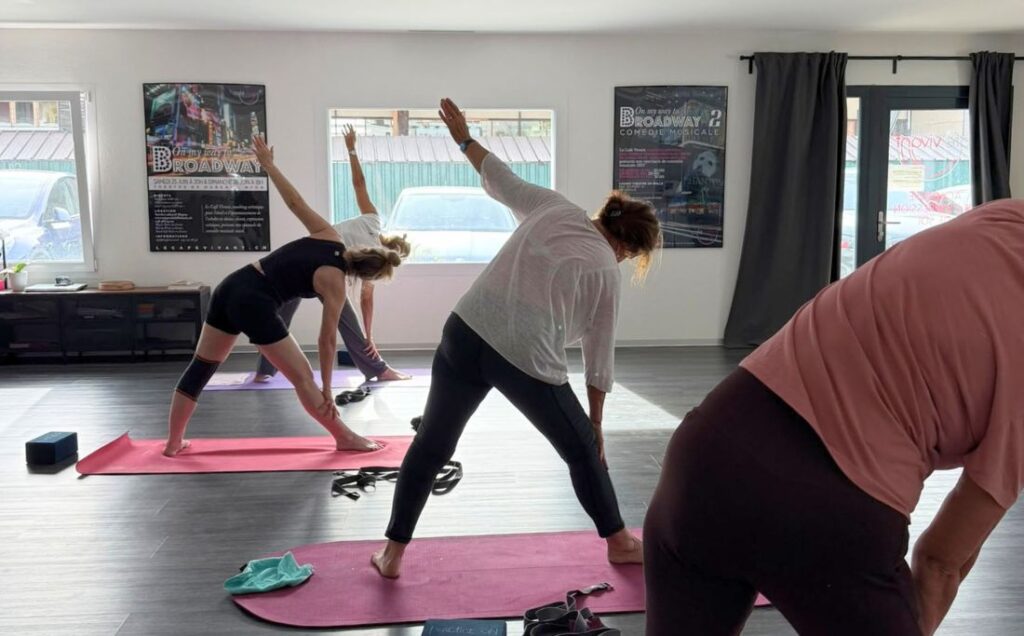
For my sessions, use the information attached to your booking and ask which items are provided or should be brought. Class photographs can show equipment without explaining who supplies it.
Blocks and bricks: a support with different shapes
You may hear both “block” and “brick.” The terms can refer to supports with different dimensions, so look at the item the teacher is indicating instead of assuming the name always means one exact shape.
In a teacher-led practice, a support may change the height of a contact point or provide a place to rest part of the body. Its placement depends on the position and the person using it. You do not need to work out a setup by copying a photograph.
If an instruction is unclear, ask which way the block should face and where it should go. That is a question about using the equipment, not an admission that you are less capable than someone else in the room.
Straps and belts: learn the intended use
A yoga strap may also be called a belt. If one is used in a class, first understand the purpose of the instruction and how the teacher wants it arranged. The presence of a strap is not an invitation to pull yourself as far as possible into a position.
You can ask for a demonstration of the fastening or the part you are meant to hold. Take time to understand the setup before following a movement; there is no prize for knowing the equipment without being shown.
Before buying a strap for a first visit, ask whether you need to bring one. Lengths and fastenings vary, and an online shopping list cannot tell you which equipment a particular class uses.
Blankets and bolsters: support is more than a soft surface
A blanket can be used in different ways, including as a covering or a folded support. A bolster is a larger cushion-like yoga support. How either item is used depends on the practice and the instruction; the name alone does not explain a position.
When support is arranged for a particular purpose, the details matter. Ask how it should be placed rather than adding more height or changing its position simply because a different arrangement looks comfortable from a distance.
Equipment can make a position look quite different from the version you have seen elsewhere. Concentrate on the instructions for the practice you are actually attending, not on removing props to make the shape look more familiar.
Ask before you buy or pack
A useful first message is: “I am joining your Slow Flow Yoga class for the first time. Which equipment is available, and what would you like me to bring?” That gives you a specific packing list without making assumptions about the venue.
If you already own a mat or another item, ask whether you can use it in the session. You can decide about additional purchases after you understand the class and the equipment you actually use.
My Slow Flow Yoga page lists the current offering at Café Vivant in Gingins. For an equipment question, contact me before your visit. You can arrive ready to learn without arriving as an equipment expert.
Questions about yoga equipment
Ask what your particular class provides and what you should bring before buying equipment. A general online list is not a confirmed packing list for the session.
A prop is equipment used for a purpose in a practice, rather than a label for a student’s level. Follow the instructions for the session you are attending.
The names are often used for the same type of equipment. Fastenings and lengths vary, so ask for a demonstration of the item used in your class.
Follow the teacher’s instructions and ask for clarification if the setup is unfamiliar. A photograph does not explain the purpose or placement for your own practice.