Slow Flow, Yin and Restorative yoga can all appear in searches for a slower practice, but they are not interchangeable descriptions. Slow Flow centres on movement; Yin typically includes longer-held positions; Restorative emphasises supported resting positions. If you are choosing a class near Nyon, these distinctions can help you ask better questions about the actual session. My local yoga offering is Slow Flow in Gingins.
Compare what you will actually be doing
Instead of arranging the three names on a scale from easy to difficult, look at their formats. Moving between positions, remaining in a position and resting with support are different experiences. The word “slow” does not tell you everything about any of them.
This comparison is an orientation, not a description of every teacher’s class. A session may include elements from more than one approach, and the listing should explain that. Ask about the format when a title leaves you uncertain.
| Format | Main feature to ask about | Useful question |
|---|---|---|
| Slow Flow | Mindful movement and transitions at the teacher’s chosen pace | How much movement and floor work does this class include? |
| Yin | Longer-held positions and fewer changes of pose | How are positions approached, held and adjusted? |
| Restorative | Supported resting positions using props | How is support arranged and what equipment is provided? |
Slow Flow: movement with time to notice
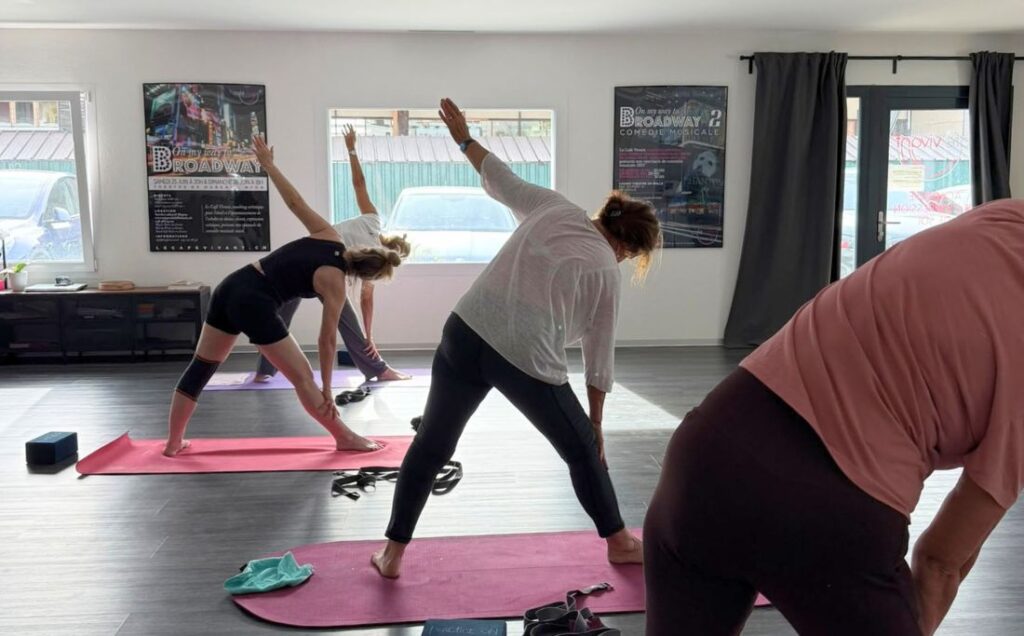
My Slow Flow Yoga offering brings together mindful movement, breath and moments of stillness. If you are drawn to moving rather than spending most of a session in a few positions, read the class description with that preference in mind.
A slower pace does not mean there is no physical effort. Ask how transitions are taught, how much standing or floor-based movement is included, and what options can be discussed. Those details are more useful than assuming the title describes a particular level of intensity.
You also do not need to assume that “flow” means moving without a pause. The teacher’s explanation of the specific class is your reference for what to expect.
Yin: longer-held positions
Bernie Clark’s guide to the practice of Yin Yoga describes longer-held postures and fewer poses in a session than in more active formats. Remaining in a position is a central part of the distinction.
That stillness should not be confused with fully supported rest. Before joining a Yin class, ask how the teacher approaches the positions, the time spent in them and the options available. A short list of poses does not tell you how a session will feel.
If you are choosing mainly because you want very little movement, make sure you also understand what remaining in a position involves. Less movement and less sensation are not the same description.
Restorative: resting with support
The Restorative Yoga Teachers Directory associated with Judith Hanson Lasater describes a practice using props to support the body in resting positions, with an emphasis on quiet and relaxation rather than stretching.
When comparing a Restorative class, ask how the support is arranged, which equipment is used and how long the session lasts. Time spent setting up support is part of understanding the format, rather than an inconvenience before the “real” practice.
The use of props alone does not make a class Restorative. Equipment can appear in many yoga formats. Look at the purpose and structure of the session instead of deciding from a photo of a blanket or bolster.
Choose your next question, then your class
You might ask yourself whether you want to explore movement, a longer-held position or supported rest. You do not have to choose one approach permanently; you are choosing the format you want to understand next.
This guide does not mean that I offer all three styles locally. My current local listing is for Slow Flow Yoga at Café Vivant in Gingins, near Nyon. Use it for the actual class dates and booking options.
If you have been looking for Yin or Restorative yoga and are wondering how my class compares, ask me about the Slow Flow format before booking. A clear description is more helpful than treating the three names as different words for the same class.
Questions about slower yoga formats
No. Slow Flow centres on movement and transitions, while Yin is characterised by longer-held positions. Ask about the specific class rather than assuming that both titles mean the same experience.
They describe different approaches. Yin uses longer-held positions, while Restorative emphasises supported resting positions. Read the teacher’s description of the actual session.
Equipment alone does not define the format. Look at how support is used and what the session is intended to involve.
My current local yoga page lists Slow Flow Yoga at Café Vivant in Gingins. This comparison is not an announcement of local Yin or Restorative classes.