A sound bath usually places an instrumental soundscape at the centre of the session. Guided meditation uses spoken instructions to lead a practice. Both involve listening, and a session may combine them, but the words describe different features of the experience. If you are deciding what to try, ask what you will actually be listening to rather than treating the two labels as interchangeable.
Ask what leads the session
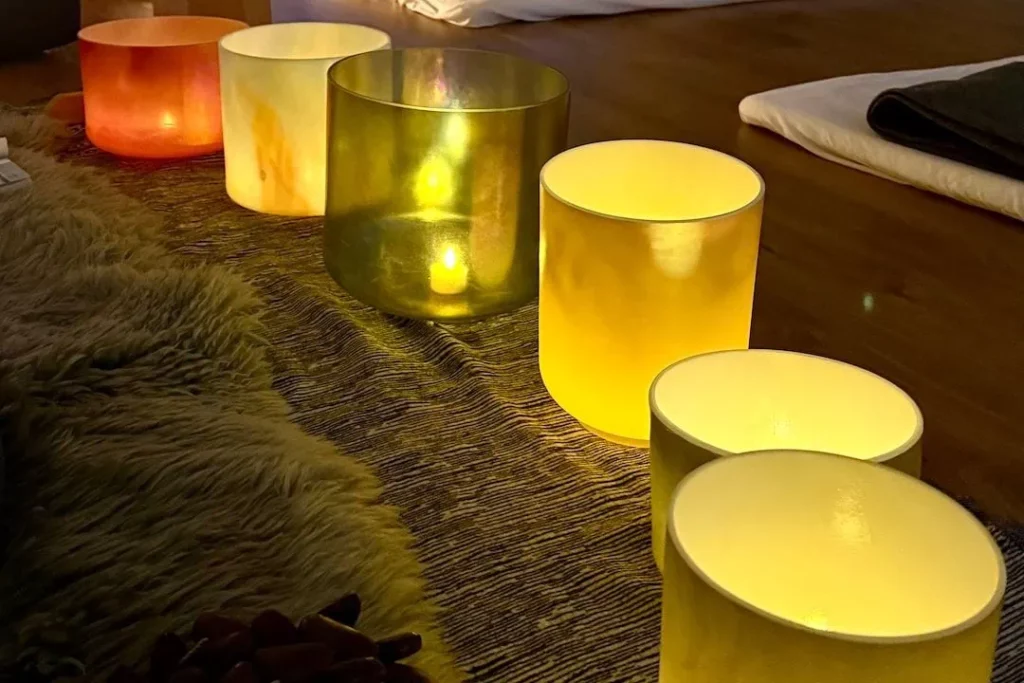
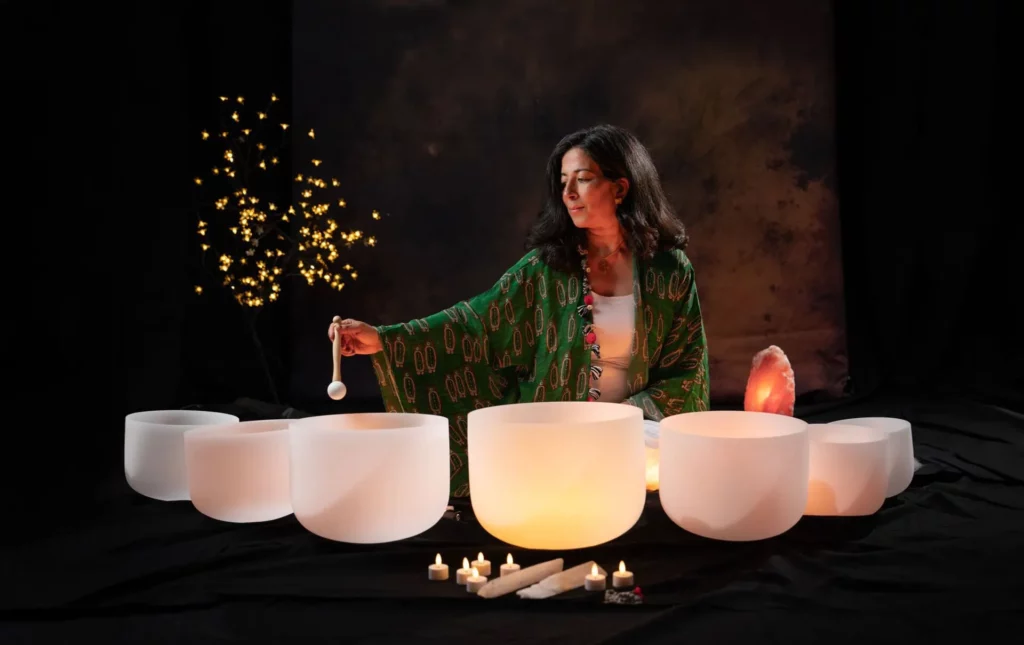
In my sound meditation offering in Nyon, instruments including crystal bowls, gongs and chimes create the soundscape. Listening to those sounds is central to the format.
With guided meditation, a teacher or recording offers instructions. The guidance might introduce a focus, invite you to notice something or move through different parts of a practice. It does not have to mean continuous speaking from beginning to end.
A sound bath can include an introduction or spoken guidance, and a guided meditation can invite attention to sounds. The useful distinction is the role of the instruments and words in the particular session, not whether either one appears at all.
Guided meditation is a broad description
For examples of the variety, UCLA Mindful’s guided meditation collection includes practices with different focuses, such as breathing, body awareness and sound. The collection illustrates why the title “guided meditation” does not describe one fixed experience.
You may prefer having a spoken suggestion to follow, or you may find an instrumental soundscape more appealing. Neither preference needs to become a judgement about which approach is better. It can simply help you choose what you would like to explore.
If a listing uses the word “guided,” ask about the kind of guidance and the language used. Those details may matter more to your decision than the general category.
Instrumental sound and spoken words offer different starting points
Words can give you an explicit invitation: a teacher explains where to place your attention or how the practice will unfold. With instruments, you may notice the sound itself, its changes or the spaces between sounds without needing to translate it into an instruction.
That does not make a sound bath an exercise in identifying every instrument. You can listen without knowing the names of notes or following a musical structure. Equally, guided meditation is not a test of remembering everything the teacher says.
Consider what attracts you now. Would you like to explore listening to a soundscape, or are you looking for a practice organised around spoken prompts? Reading the session description can help you make that choice.
Compare the practical setting too
Two sessions can have similar descriptions but very different arrangements. Check whether they are live or recorded, group-based or individual, and how long they last. Ask what positions are available and what equipment is used.
For a sound bath, you may have questions about the instruments, sound levels and the room. For a spoken practice, you may want to know whether it includes silence, a body scan, imagery or another particular focus. Avoid assuming those features from the title alone.
There is no need to choose by a promise of a particular feeling. A label does not guarantee relaxation or a particular response. Your preference for the format and the practical setting are useful starting points in their own right.
Explore the local offering with a clear expectation
My current Sound Meditation page lists sessions at Évolution Club in Nyon. It describes the instrumental offering and holds the current dates and booking options. This comparison does not announce a separate guided meditation class.
If you want to know the balance of instruments and spoken guidance in a particular session, ask me before booking. You can also ask about the language used for introductions and practical instructions.
For the wider first-visit details, read what to expect at your first sound bath. When you are ready, explore my current sound meditation sessions with a clearer idea of the format you are choosing.
Questions about the two formats
Not necessarily. A sound bath centres on an instrumental soundscape, while guided meditation uses spoken instructions. A particular session may include elements of both.
Yes, spoken introductions or guidance can be included. Ask about the balance of words and instruments in the session you are considering.
No. Guided practices can use different focuses. Read the description or ask whether imagery, body awareness, breathing or another approach is included.
This article is a comparison of formats. My current local Sound Meditation page describes the instrumental offering; contact me about the guidance included in a particular session.